Edgewater NJ Rental Market Guide for NYC Commuters
April 16, 2026
April 16, 2026
If you want a Hudson waterfront address without giving up access to Manhattan, Edgewater is probably already on your list. For many NYC commuters, the challenge is not whether Edgewater is appealing, but whether the rent, commute, and move-in costs actually make sense for your day-to-day life. This guide breaks down what you should know about Edgewater rentals, from price ranges and lease terms to ferry and bus options, so you can plan with more clarity. Let’s dive in.
Edgewater is a small waterfront borough in Bergen County with an estimated 2024 population of 15,116. Its housing mix includes single-family homes, duplexes, townhouses, mid-rise multifamily buildings, and high-rise multifamily communities, reflecting how the borough has evolved over time. According to U.S. Census QuickFacts for Edgewater, the owner-occupied housing rate is 39.8%, which helps explain why renting is such a common option here.
For many renters, Edgewater offers a practical middle ground. You can stay close to Manhattan while testing commute routines, building preferences, and monthly costs before deciding whether to buy later. That can be especially useful in a market where the median monthly owner cost with a mortgage is $3,935.
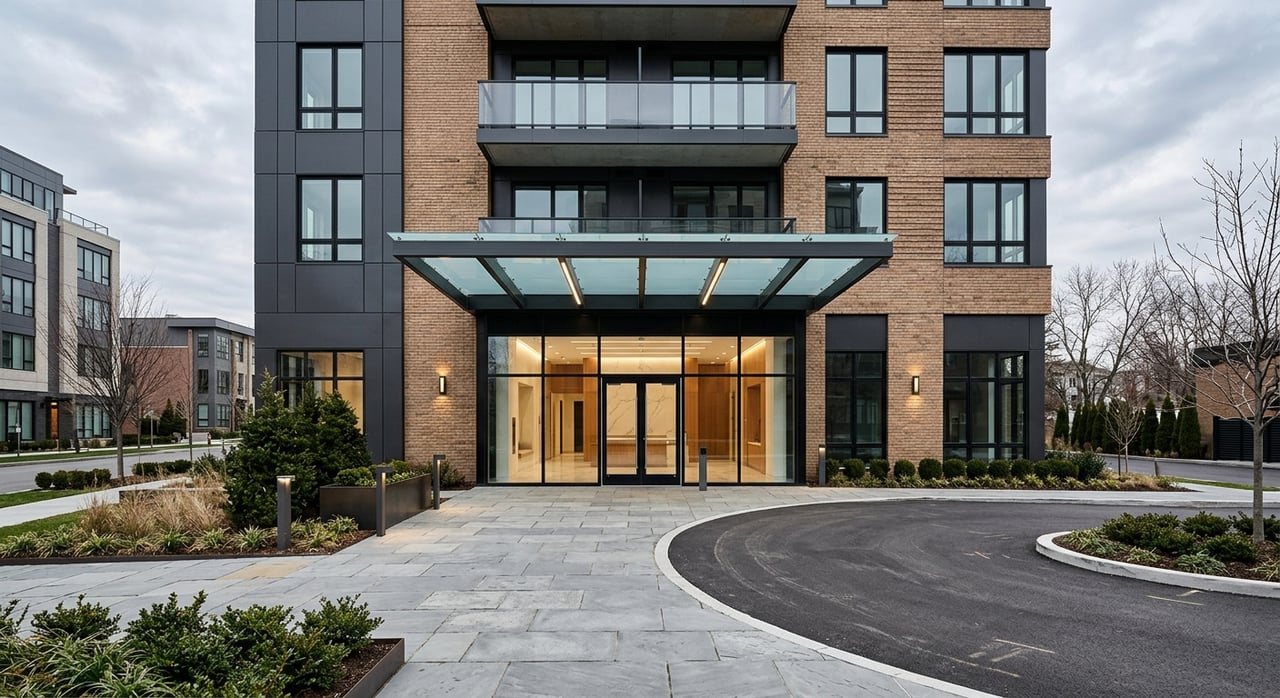
A large share of commuter-friendly inventory is concentrated near River Road and the waterfront. Apartments.com’s local guide describes Edgewater as a place with waterfront high-rise communities and townhouses, and current listings also include condo rentals in communities such as Independence Harbor and Hudson Park.
That means your options may look different depending on your priorities. If you want amenities and more predictable leasing terms, a larger apartment community may fit better. If you want a more ownership-style layout or a specific building, a condo rental may be worth exploring.
The biggest budgeting mistake renters make is mixing occupied-rent data with active-listing data. Census figures are useful for background, but they are not the same as what you will likely see when you search available units today.
Current asking-rent sources place Edgewater well above the Census median gross rent of $2,579. As of April 2026, Apartments.com reports average rents of:
The same source shows property-type averages of $2,934 for apartments, $3,612 for houses, and $2,314 for condos. Meanwhile, Zillow’s Edgewater rental market trends show an all-bedroom average asking rent of $3,500, with asking rents ranging from $1,650 to $11,000 and 68 available rentals.
Zumper’s April 2026 data lands in a similar place, showing a median rent of $3,502, a one-bedroom average of $2,880, and a two-bedroom average of $3,950. Taken together, the most practical planning range is this: expect low-$3,000s for smaller units and mid-$4,000s or more for larger waterfront rentals.
For NYC commuters, rent is only part of the equation. Your daily route can affect where you want to live within Edgewater, how much flexibility you have, and what transportation costs you should build into your budget.
The ferry is one of the clearest commute options because the route and fare structure are easy to track. NY Waterway’s Edgewater Ferry Landing page lists direct service to Midtown W. 39th Street, while Brookfield Place and Pier 11/Wall Street are reached via transfer at Port Imperial.
The weekday Midtown commuter schedule currently includes departures from Edgewater at 6:05 AM, 6:45 AM, 7:25 AM, 8:05 AM, 9:25 AM, 5:10 PM, and 6:30 PM. Adult one-way fares are currently $12.50 to Midtown and $14.25 to Pier 11. One important detail is that the terminal has no public parking, so access typically depends on walking, shuttle service, or rideshare.
The local shuttle can be a major convenience factor if you are planning to use the ferry regularly. According to the Edgewater shuttle and bus information page, the shuttle is timed to ferry departures and arrives at the landing about 15 minutes before each departure.
Stops along River Road include Main Street, City Place, Thompson Lane, The Commons by River Club, Archer Avenue, Vreeland Terrace, Russell Avenue, Garden Place, and Hilliard Avenue. If ferry access matters to you, it is smart to compare available rentals not just by rent, but by how easy they make your morning routine.
NJ Transit buses are another core option for commuters. MyBus identifies route 158 as New York via River Road and route 188 as West New York via Edgewater at Edgewater stops.
For budgeting, NJ Transit notes that one-way bus tickets are valid for one trip, expire after 30 days, and monthly passes can save up to 30 percent compared with daily commuting. If you commute five days a week, that kind of savings can make a meaningful difference over a full lease term.
Most renters focus on monthly rent first, but Edgewater move-in costs can be just as important. In many buildings, your upfront total may include several charges beyond the first month’s rent.
Current examples in Edgewater show common 12-month leases, with some flexibility in certain communities. For example, River Club Apartments advertises lease terms from 12 to 19 months, while condo listings commonly use 12-month terms.
Move-in charges can vary by property. Current examples include:
New Jersey law caps a residential security deposit at 1.5 months’ rent. The New Jersey Courts renter resource is a useful starting point if you want to review state guidance tied to rental processes and related fees.
Two Edgewater rentals with the same asking rent may have very different total monthly costs. That is why it helps to ask for a written breakdown before you submit an application.
Make sure you confirm:
Some current listings include parking, water, cable, or internet, while others charge separately. River Club’s listing details are a good example of how building-specific these costs can be.
If you are targeting Edgewater as an NYC commuter, it helps to think in two layers: housing cost and commute cost. That gives you a more honest picture of what will feel comfortable each month.
A simple planning framework might look like this:
For many renters, Edgewater works best when you value waterfront access, Bergen County location, and a Manhattan commute enough to justify a higher monthly number than you might find farther inland. The key is not finding the absolute lowest rent. It is finding the right balance of home, commute, and predictability.
If you are not ready to buy yet, renting in Edgewater can still be a smart long-term move. It gives you time to learn which stretch of River Road fits your routine, whether ferry or bus service works better for your schedule, and how different buildings handle fees, parking, and amenities.
That trial period can be valuable in a market with both rental communities and ownership-oriented condo and townhouse options. Edgewater’s housing planning documents highlight that broad mix of housing types, which is part of what makes the borough appealing to people in transition, including NYC commuters who may eventually want to purchase nearby.
If you want help sorting through Edgewater rentals or planning your next move in Bergen County, Sara Shin Select offers relationship-driven guidance with local market insight to help you weigh your options with confidence.
Whether it’s a home, warehouse, or medical building, Sara knows how to showcase properties at their highest value.