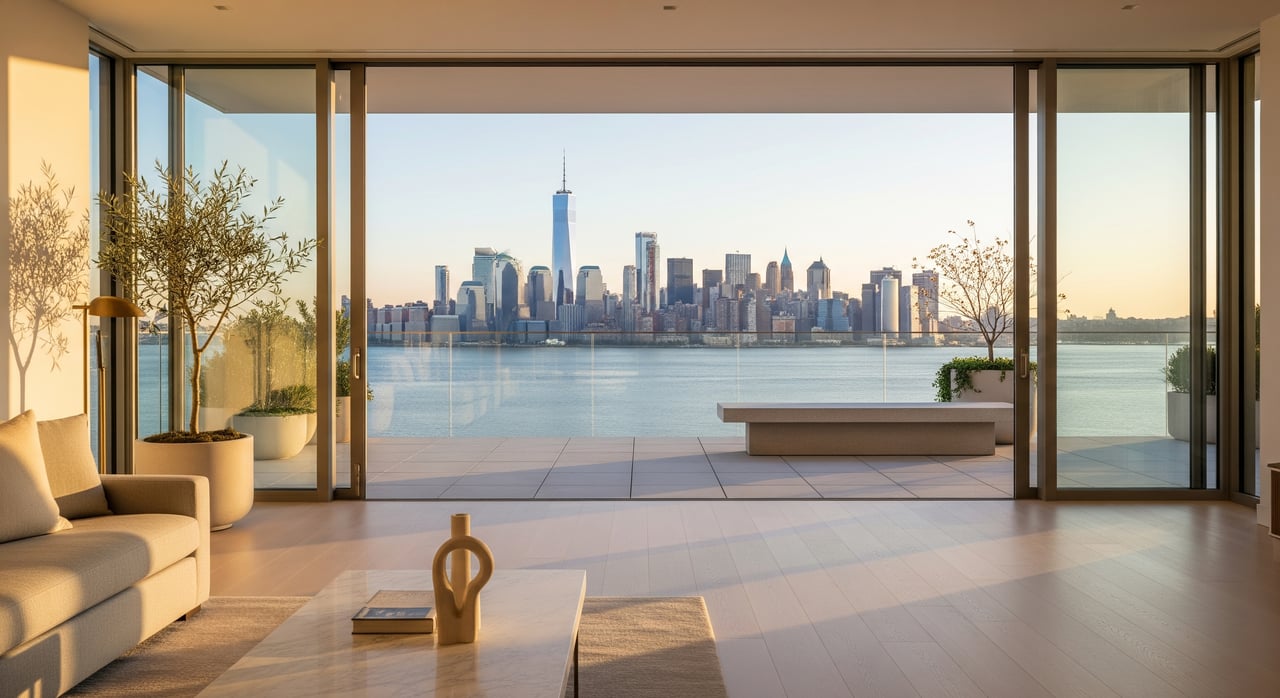
Edgewater Waterfront View Premiums Explained in Full
January 8, 2026
January 8, 2026
Is that Hudson River and Manhattan skyline view really worth the price difference you see in Edgewater listings? If you are buying or selling along the waterfront, the view can be a powerful value driver, but not all views command the same premium. You want clarity before you make a major decision.
In this guide, you will learn what creates a view premium in Edgewater, how appraisers measure it, and which risks and costs can reduce the net benefit. You will also get practical steps to price, purchase, or market a view property with confidence. Let’s dive in.
Edgewater lines the west bank of the Hudson River opposite Manhattan. That location shapes buyer demand. Many buyers prioritize open water and skyline views, outdoor access along the river, and convenient transit into New York City. Those preferences create strong, consistent view premiums across condos, townhomes, and select single-family homes near the waterfront.
Not all views are equal. Premiums rise with specific, visible traits you can verify on site and in photos:
Edgewater’s market is dominated by mid- and high-rise condos, plus a smaller share of townhomes and single-family homes near the river. How the premium shows up can differ by product type:
Building amenities and the neighborhood environment also matter. Garage parking, concierge services, and strong transit links can help support higher prices for view units. Noise, privacy, and proximity to busy promenades can reduce the perceived benefit.
The most practical way to isolate a view premium is to compare two very similar sales that differ mainly by the view. For condos, the gold standard is same-building, same floor plan, and similar condition. If one sold with an unobstructed skyline view and one sold without, the difference helps quantify the premium. Time adjustments are often needed to account for market movement between sale dates.
Appraisers use the comparable-sales approach and apply adjustments for the presence or absence of a similar view. When local data shows consistent premiums for certain exposures within a development, those adjustments can be supported. If evidence is limited, appraisers may be conservative and rely on broader indicators like listing history or rent differentials.
Some studies use statistical models across many sales to estimate the value of a view while controlling for other variables. That is useful for policy or big-picture understanding, though less common for a single valuation. For rentals or investment units, the income approach can help. If a view supports higher rents, that additional income capitalizes into a higher value.
Buyers often over- or under-estimate certain view types. A partial water glimpse may not justify a large premium, while a wide skyline panorama often does. The only reliable way to price it in Edgewater is to use very local evidence. That means strict pairing, tight comp selection, and a clear rationale that appraisers and buyers can follow.
Much of Edgewater’s riverfront carries higher flood risk than inland areas. If a property sits in a FEMA Special Flood Hazard Area, lenders may require flood insurance. Premiums, elevation certificates, base flood elevations, and building floodproofing can all affect your carrying costs.
Higher insurance costs, plus any future premium changes, can narrow the buyer pool and reduce the net amount you should pay or expect to receive for a view.
Raising utilities, adding flood vents, and using flood-resistant materials can reduce risk and sometimes lower insurance premiums over time. These upgrades come with upfront costs. Some lenders require flood insurance regardless. Availability and cost of lending can affect demand and pricing for waterfront units.
Waterfront condo and townhome communities often face higher maintenance needs for exterior elements, landscaping, seawalls, or shore protection. Review HOA budgets, reserve studies, and any special assessments tied to flood mitigation or resiliency. A well-funded plan is a plus, though it may mean higher dues. Underfunded reserves can put pressure on future owners.
Easements, bulkhead ownership, and riparian rights shape what you can and cannot do at the edge of the water. Private docks and slips are rare in Edgewater and often require state and federal approvals. Limits on improvements can reduce the ability to monetize the waterfront beyond the view itself.
For condos, prioritize same-building sales with the same or nearly identical floor plans. Adjust for floor level, terrace size, parking, renovation scope, and exposure. If you need to look outside the building, stay within the immediate waterfront corridor to preserve context.
Markets move. Apply time adjustments when you compare older sales to current conditions. Document the method and sources that support your time factor so an appraiser can follow your logic.
If paired sales are scarce, triangulate with rental differentials, listing history for similar exposures, and the level of buyer competition at open houses. Make the case with clear, objective evidence rather than general claims about the view.
In Edgewater, Hudson River and Manhattan skyline views can command meaningful premiums. That premium is strongest when the view is unobstructed, elevated, and paired with usable outdoor space and strong building amenities. Your net premium depends on flood-related costs, HOA strength, and the permanence of the view.
If you want help quantifying the right price or building a strategy to market your view, reach out to a local team that blends data with careful presentation. With neighborhood-level expertise and white-glove marketing, Sara Shin Select can help you price, position, and negotiate your Edgewater move with confidence.
Whether it’s a home, warehouse, or medical building, Sara knows how to showcase properties at their highest value.